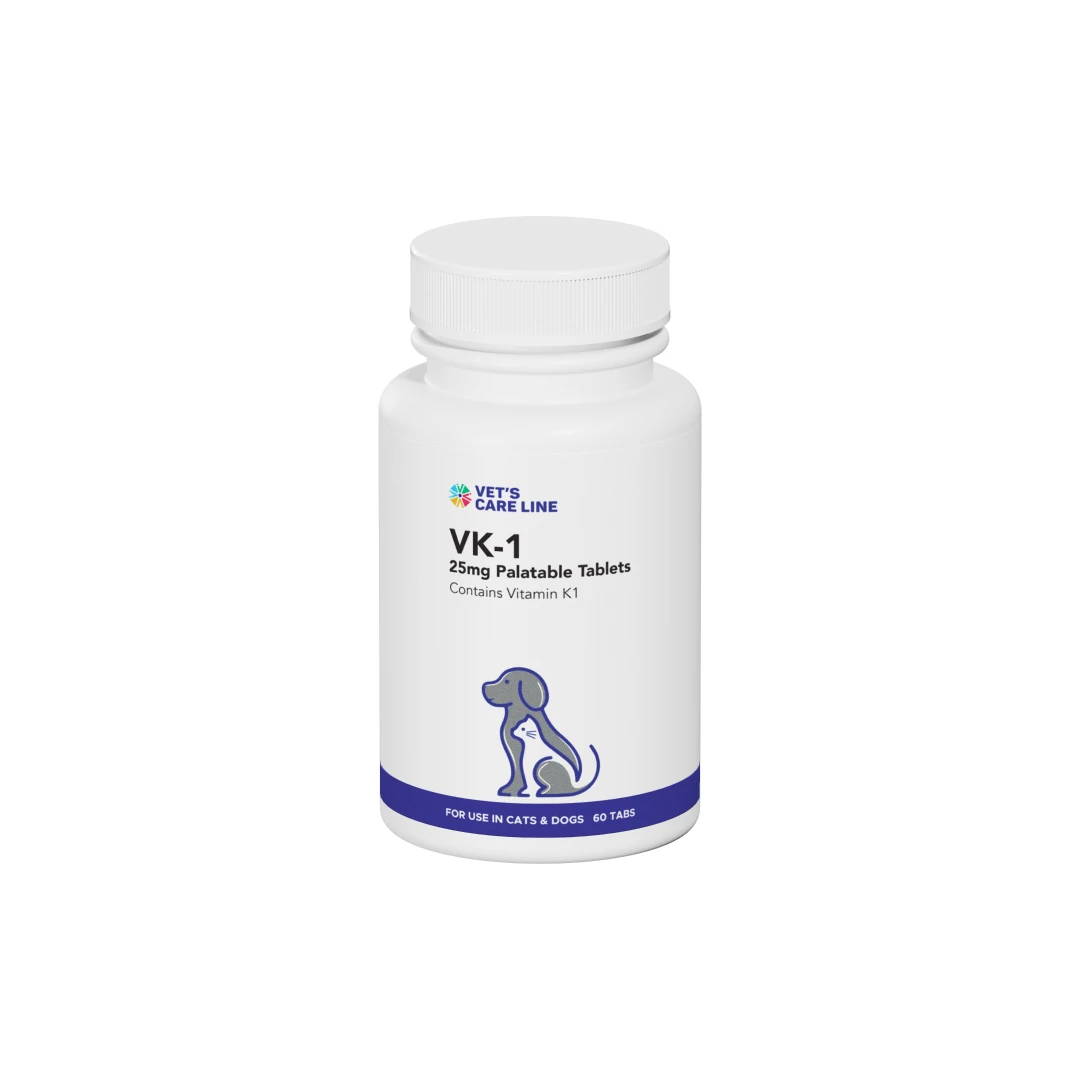
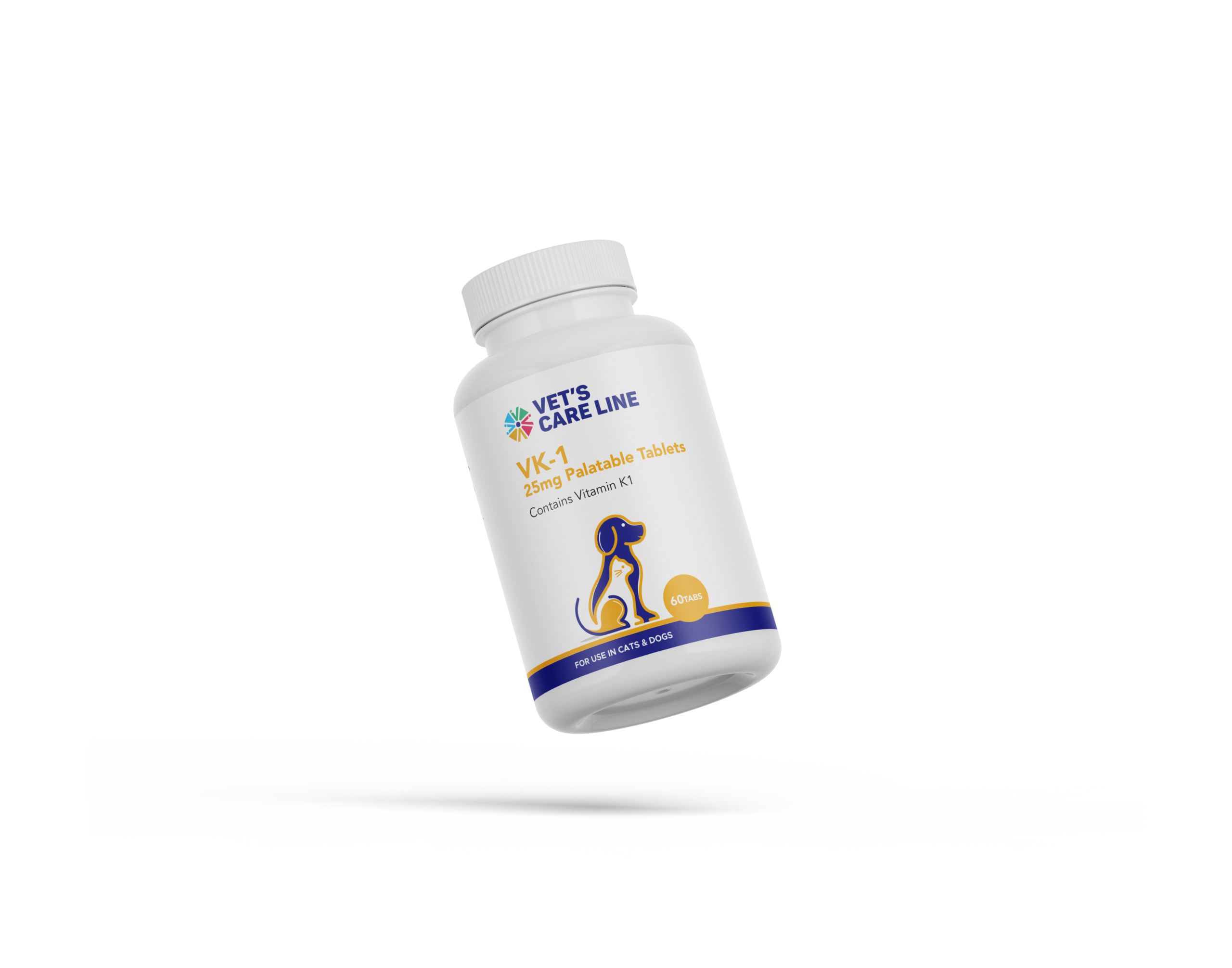
Each tablet contains 25mg Vitamin K1 (Phytonadione).
VK-1 is primarily used to treat anticoagulant rodenticide toxicity, which affects Vitamin K-dependent clotting factors (II, VII, IX and X), leading to coagulation failure and internal bleeding. It may also be indicated for bleeding disorders associated with liver failure or impaired absorption of Vitamin K due to inflammatory bowel disease (IBD), exocrine pancreatic insufficiency (EPI), or bile duct obstruction.
Increases in clotting factors may not be apparent until 6–12 hours after oral administration. The duration of therapy depends on the resolution of haemorrhage and monitoring of prothrombin time (PT).
- Lower dose: 2.5 mg/kg twice daily with fatty meals
- Higher dose: 5 mg/kg once daily with fatty meals
Recommended duration of treatment for rodenticide toxicity:
- Short-acting anticoagulant rodenticides (e.g., warfarin, pindone): 14 days
- Bromadiolone: 21 days
- Second-generation anticoagulant rodenticides (e.g., brodifacoum, difethialone, difenacoum): 28 days
Oral absorption may be impaired in animals that are hypovolaemic, have bile acid deficiency, or suffer from malabsorptive conditions.
Cornell University. “Vitamin K Therapy | Cornell University College of Veterinary Medicine.” n.d. Accessed December 15, 2025. https://www.vet.cornell.edu/animal-health-diagnostic-center/laboratories/comparative-coagulation/clinical-topics/vitamin-k-therapy
Clinicians Brief. “Ingestion of an Unknown Rodenticide in a Dog.” August 2008. https://www.cliniciansbrief.com/article/ingestion-unknown-rodenticide-dog
Clinicians Brief. “Rat Bait Toxicosis in a Dog.” September 2012. https://www.cliniciansbrief.com/article/rat-bait-toxicosis-dog