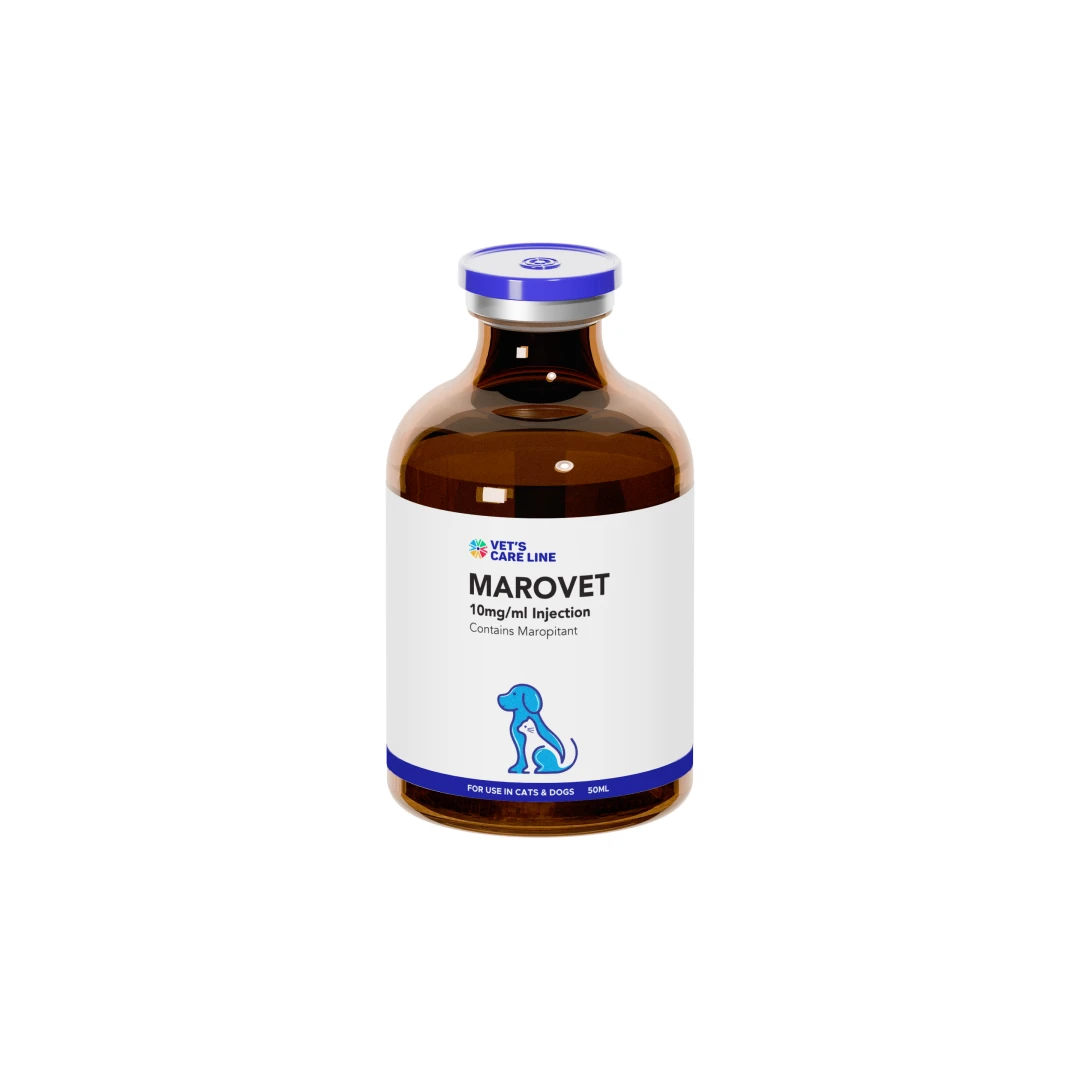
Each ml contains 10mg Maropitant citrate.
Marovet is a neurokinin-1 (NK1) receptor antagonist that binds to substance P within the emetic centre. Substance P is the key neurotransmitter involved in the vomiting process.
Cats: Indicated for the prevention and treatment of vomiting, as well as the reduction of nausea.
Dogs: Indicated for the prevention and treatment of vomiting, chemotherapy-induced nausea and vomiting, perioperative nausea and vomiting, and to improve recovery from general anaesthesia following the use of μ-opioid receptor agonists such as morphine.
Maropitant is not recommended for the treatment of motion sickness. Supportive measures—such as dietary control, fluid therapy, and addressing underlying causes—should be implemented alongside the use of this antiemetic.
Cats/Dogs: 1 mg/kg (1 ml/10 kg) subcutaneously (SC) or intravenously (IV) for up to five consecutive days. IV administration should be given as a single bolus without mixing with any other fluids.
To prevent vomiting, administer one hour before the event. The clinical effect is expected to last approximately 24 hours.
As maropitant accumulates in the body after once-daily repeated administration, lower doses than recommended may be sufficient in some animals and for subsequent doses.
Signs of nausea in dogs, including excessive salivation and lethargy, may persist even after treatment.
Special Precautions
The safety of this product has not been established in cats under 16 weeks of age, in dogs under 8 weeks of age, or in pregnant or lactating cats and dogs. Use only following a careful benefit–risk assessment.
Maropitant is highly bound to plasma proteins and may compete with other highly protein-bound medications. It is metabolised in the liver and should be used with caution in animals with hepatic disease.
As it can accumulate due to metabolic saturation, liver function should be carefully monitored, particularly during long-term treatment (e.g. 14 days).
Side Effects
Transient pain at the subcutaneous injection site is common, and restraining measures may be required. Very rarely, adverse effects may include anaphylactic-type reactions, lethargy, or neurological disorders.
RAMSEY, D. S. “Safety and Efficacy of Injectable and Oral Maropitant, a Selective neurokinin1 Receptor Antagonist, in a Randomized Clinical Trial for Treatment of Vomiting in Dogs.” Journal of Veterinary Pharmacology and Therapeutics 31, no. 6 (2008): 538-543. https://doi.org/10.1111/j.1365-2885.2008.00992.x
Hay Kraus, Bonnie. “Spotlight on the Perioperative Use of Maropitant Citrate.” Veterinary Medicine: Research and Reports, no. 8. (2017): 41-51. https://doi.org/10.2147/vmrr.s126469
Maropitant: A Comparative Analysis of Efficacy in Canine and Feline Research Models. BenchChem (2025).