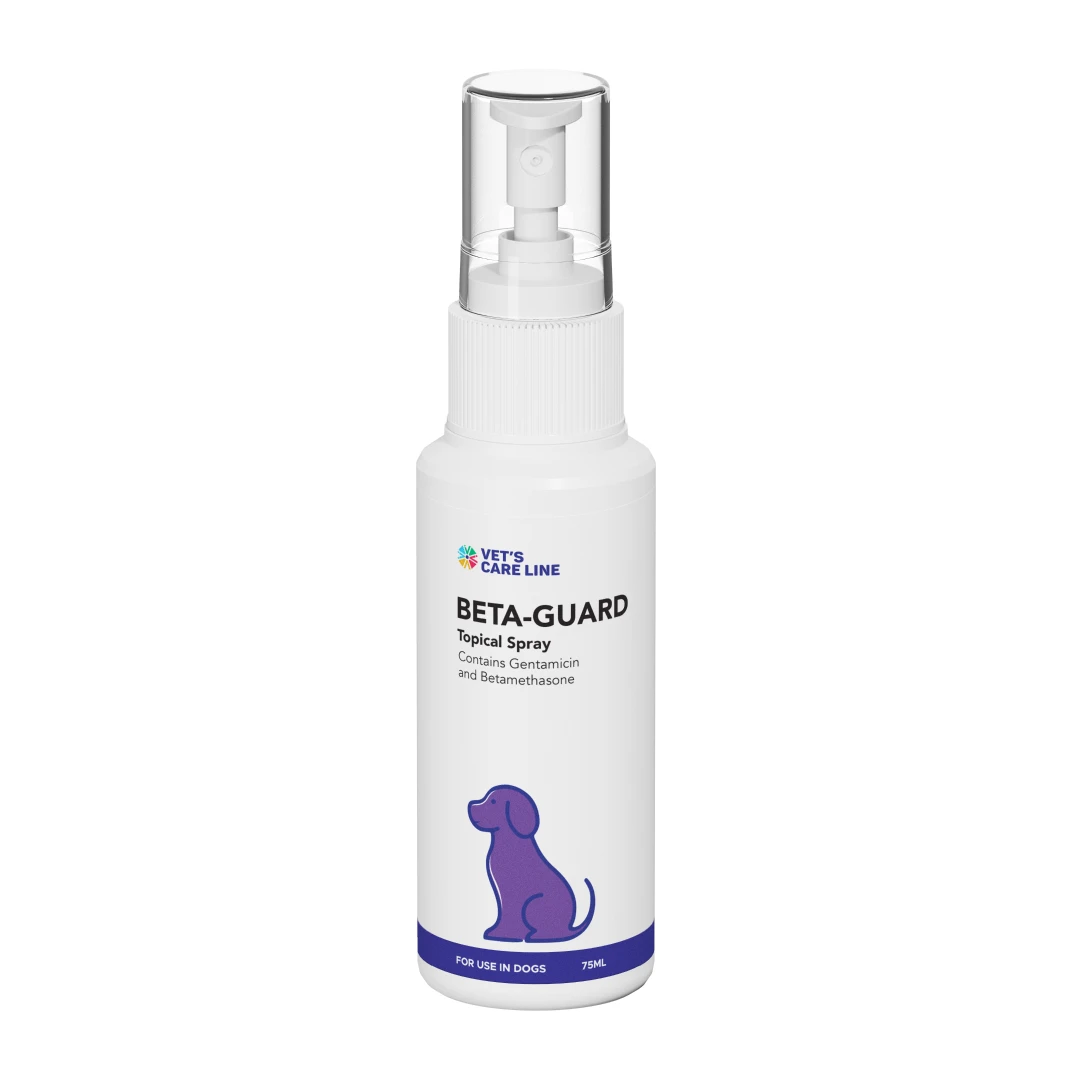
Each ml contains 0.57mg Gentamicin sulphate & 0.284mg Betamethasone valerate.
Beta-Guard is indicated for the treatment of infected superficial lesions in dogs caused by bacteria susceptible to gentamicin. Gentamicin is active against Gram-positive Streptococci and Staphylococci, as well as Gram-negative bacteria including Klebsiella, E. coli, and Pseudomonas spp. Betamethasone is a corticosteroid with non-specific anti-inflammatory properties. Topically applied corticosteroids may help reduce the occurrence of erythema, pruritus, and oedema.
1. Hold the bottle upright, 7–15 cm from the lesion, and press the sprayer head twice.
2. Administer 2–4 times daily for 7 days.
*Remarks : One pump delivers 0.7 ml of product.
Avoid contact with the eyes. Wash hands after application or wear gloves when applying.
Contraindications
- Use with caution in animals with pre-existing renal disease.
- Other risk factors for the development of toxicity include age (neonatal and geriatric animals), fever, sepsis, and dehydration.
Pregnancy and Lactation
- Systemic corticosteroids can be teratogenic or may induce parturition during the third trimester of pregnancy in animals.
- If considering use during pregnancy, carefully weigh the risks of treatment against the potential benefits.
Side Effects
- Prolonged use, or use over large areas with products containing corticosteroids (e.g., betamethasone), may cause adrenal suppression, atrophic skin, and comedone formation.
- Iatrogenic Cushing’s syndrome is possible.
- Vomiting and diarrhoea have been reported following the use of products containing betamethasone.
- Local skin reactions (burning, itching, redness) may occur, though they are unlikely.
- Betamethasone may delay wound healing, particularly if used for longer than 7 days.
Hillier, Andrew. “Guidelines for the Diagnosis and Antimicrobial Therapy of Canine Superficial Bacterial Folliculitis (Antimicrobial Guidelines Working Group of the International Society for Companion Animal Infectious Diseases).” Veterinary Dermatology 25, no. 3 (2014): 168-168. https://doi.org/10.1111/vde.12118.
Topical Gentamicin/Betamethasone (Plumb's - 2024)